When cassava seems fine, but isn’t
It’s often the quiet meals that create the most confidence: the root looks clean, the pot is boiling, and the taste comes out mild enough that no one pauses. That “normal” experience can be misleading, because cassava can seem fully cooked and still carry enough cyanide-related compounds to matter—especially if it’s eaten often, or served to people with smaller bodies.
The risk tends to hide in the parts that don’t look dramatic. When cassava is peeled or cut, its natural cyanogenic compounds can mix with enzymes in the damaged tissue, starting a chemical chain that can produce cyanide. If peeling is shallow, if the soaking/fermenting step is skipped, or if pieces are thick enough that the center doesn’t get the same treatment as the outside, some of that potential can remain even when the texture feels “done.”
One batch can feel fine, and the next—prepared the same way—may not, because variety, age, and storage change how much of those compounds are there to begin with.
What people feel when cyanide exposure starts
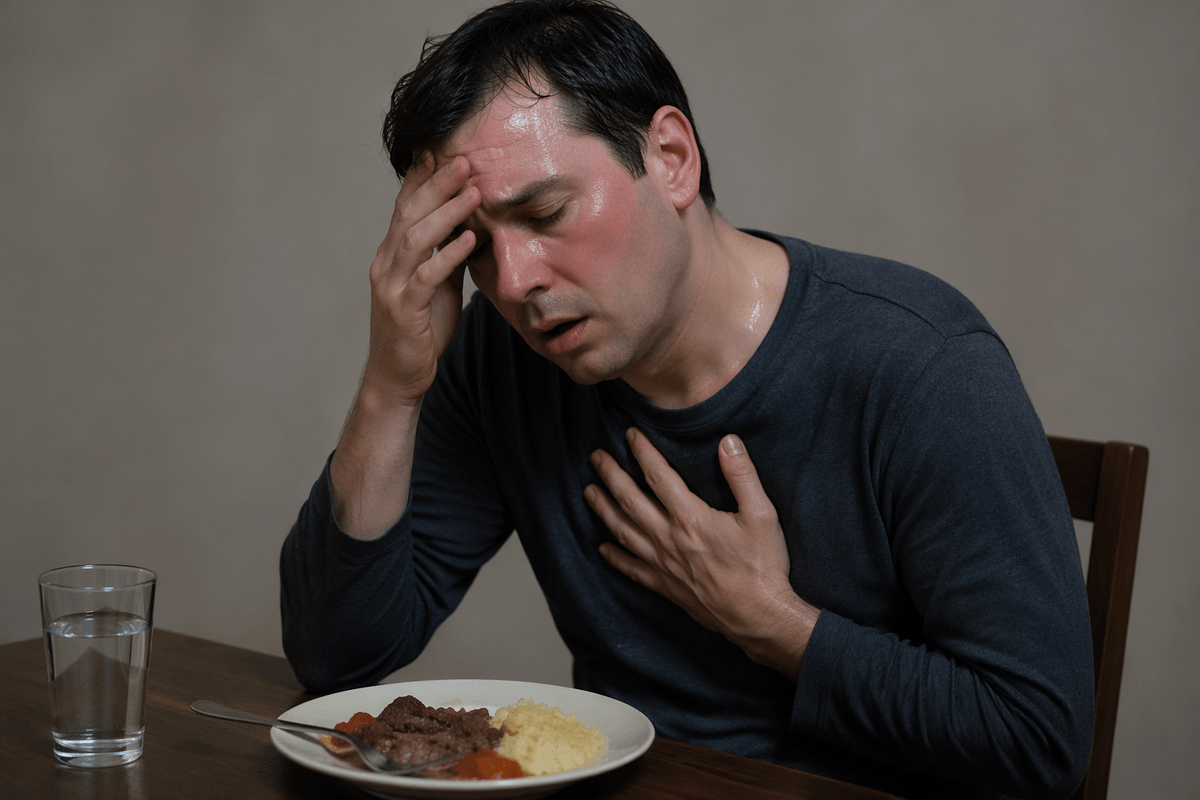
Sometimes it starts as a slightly “off” feeling during or soon after the meal—warmth in the face, a mild headache, or a wave of nausea that doesn’t match how gentle the food tasted. Because the texture was soft and the flavor seemed normal, it can be easy to blame spice, oil, or a random stomach bug, especially when only one person at the table feels it.
As exposure builds, some people notice dizziness, a sense of weakness, or a racing heartbeat that feels out of proportion to the moment. The discomfort can be inconsistent: symptoms may fade, then return, and that unpredictability is part of what makes it hard to connect to cassava.
Cutting, grating, or chewing helps convert cassava’s cyanogenic compounds into cyanide, and if enough is absorbed, the body has to divert effort into detoxifying it. When that demand rises faster than the body can clear it, symptoms may show up even though the meal itself seemed “fine.”
The hidden chemicals driving cassava’s risk
You can get a faint “almond” or sharp, grassy smell when cassava is freshly cut or grated, and then watch it disappear once it hits water or heat. That vanishing can feel reassuring, but it’s also a clue that something reactive is happening in the root’s damaged tissue.
Cassava naturally stores cyanogenic glycosides (often linamarin, and sometimes lotaustralin) in its cells. When you peel, chop, grate, or chew it, you break those cells open and let an enzyme (linamarase) contact the glycosides. That reaction forms unstable intermediates (cyanohydrins), which can then break down into hydrogen cyanide—more easily under certain conditions like warmth, time, and acidity changes. You can’t see this chain, and the taste may still seem mild.
Concentrations also tend to be higher near the peel and outer layers, so a “quick peel” can leave more of the starting material behind than people expect. If you’re eating cassava often, that small leftover potential may matter more than it seems.
Why processing changes toxin levels so much
That moment when cassava has been sitting in water and you notice tiny bubbles or a faint, sharp smell can feel like nothing—or like something “going bad.” In reality, a lot of the risk difference between batches comes from how much time and contact you give the cut surfaces to react, and then how much opportunity those reaction products have to leave the food.
Once the root is peeled and broken up, the cyanogenic glycosides and their enzyme can finally mix, which pushes the chain toward cyanohydrins and then hydrogen cyanide. Processing changes toxin levels because it controls two bottlenecks: how much cyanide gets formed, and how much of it escapes. Grating creates far more exposed area than chunking, so the reaction can run faster—but it also gives cyanide more routes to dissolve into soaking water or vent off with heat. Thick pieces can do the opposite: the outside gets “treated,” while the center stays protected, leaving an uneven result that’s hard to judge by texture alone.
A quick boil may soften starch before enough cyanide has had time to move out of the middle, especially if the pot is crowded or the pieces are large. That’s why two meals can look identical on the plate, yet land differently afterward.
Sweet versus bitter varieties change the equation
The first clue is often how little you can trust your tongue. A “sweet” piece can taste mild and still leave you uncertain, while a “bitter” one announces itself early—but not always consistently, especially after freezing, soaking, or mixing into flour.
What changes the equation is the starting load. Sweet varieties generally carry lower levels of cyanogenic glycosides than bitter varieties, so the same peeling and cooking steps may reduce risk enough more often. Bitter varieties can begin with much higher levels, which means the enzyme-driven chain has more raw material to work with once the root is cut or grated. In real kitchens, that can look like two pots treated “the same” but one batch quietly keeps more potential in the center or near the peel, even when the texture reads fully cooked.
People sometimes treat “sweet” as “ready after a quick boil,” or assume “bitter” only matters if the taste is strong. But bitterness isn’t a precise meter, and when cassava is eaten repeatedly, a small leftover amount from a milder-tasting product can still add up in the background.
A sensible shortcut that backfires unexpectedly
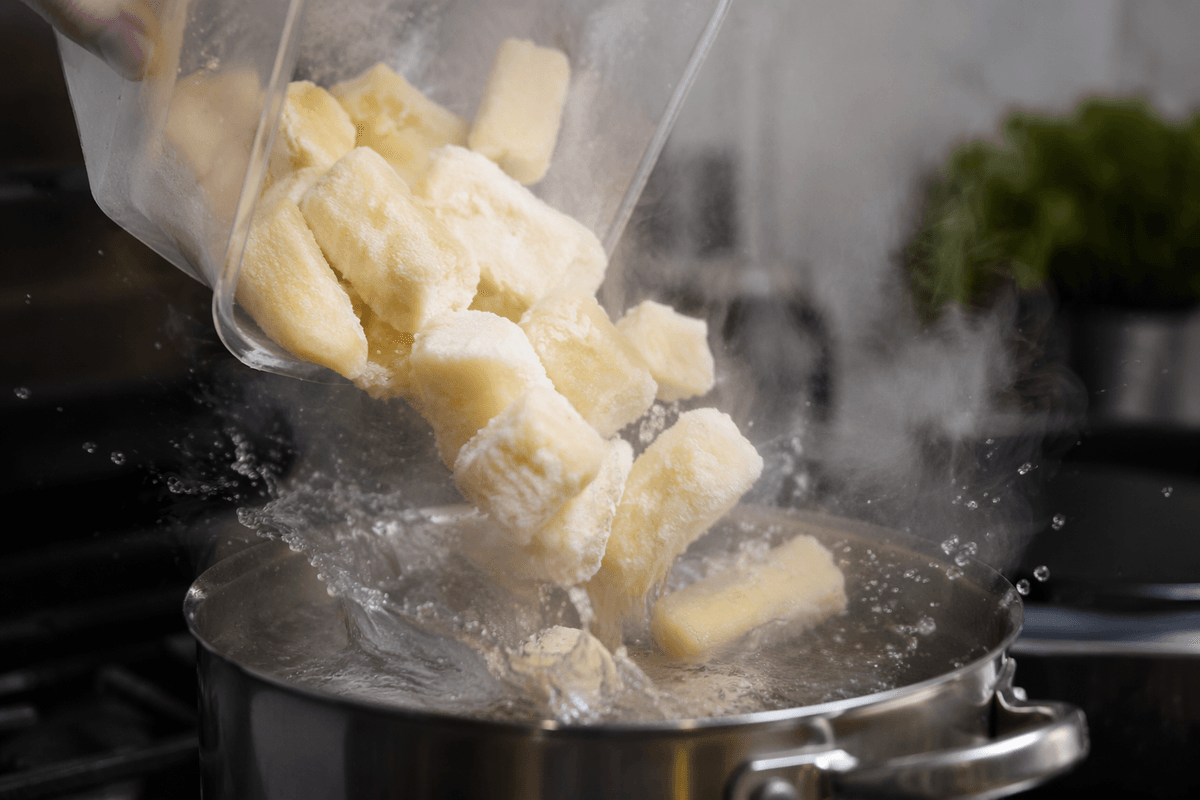
It often happens on a weeknight: the cassava is already peeled and cut, so it feels reasonable to skip the long soak and just “boil until soft.” The pot looks active, the pieces turn tender, and the smell isn’t alarming—so the shortcut feels earned.
The backfire is that softness is mostly a starch signal, not a toxin signal. Cyanogenic glycosides can still be sitting in thicker centers or in tissue close to where the peel used to be, and boiling doesn’t always give enough time for what’s inside to diffuse out. If the pieces go straight from frozen to a quick boil, there’s less time for the enzyme-driven chain to finish and for water-soluble compounds to leach—so you can end up with food that eats “done” but behaves differently in the body later.
The same shortcut may seem fine once, then feel oddly punishing after a similar meal, especially when cassava shows up repeatedly over a few days.
Preparation principles that reliably reduce exposure
The most reliable shift is when the process stops treating cassava like a single “cook until tender” ingredient and starts treating it like layers and pathways. The outer portion tends to hold more cyanogenic glycosides, so deep peeling and trimming away tough, fibrous areas matters because it removes more of the starting material before it can be converted. That can feel fussy, especially when the root looks clean, but shallow peeling is one of the easier ways to leave an uneven result.
After that, exposure drops most when you create time and surface area, then give those breakdown products somewhere to go. Smaller pieces (or grating) let linamarase contact the glycosides more completely, and soaking or fermenting keeps the cut surfaces wet so water-soluble compounds can move out. Boiling then helps drive off hydrogen cyanide, but only when there’s enough time and water exchange for the center to “catch up” with the outside—something that can be inconsistent with thick chunks or crowded pots.
If the flour is from properly processed cassava, risk is usually lower, but “quick” homemade flour or poorly processed products can concentrate what was left behind, making repeated servings the part that quietly changes the equation.