Why “high-fiber” snacks don’t always satisfy
It can be a little confusing when you finish a “high-fiber” bar in the car, feel fine for 20 minutes, and then notice that familiar hollow, distracted hunger creeping back in before the next meeting.
One reason is that “high fiber” on the label doesn’t always mean the snack will slow things down in your gut. Some fibers add bulk but don’t turn into that gel-like texture that lingers in the stomach. If the snack is mostly refined starch plus added fiber, it may still break down fast, empty from the stomach sooner, and let blood sugar rise and fall more sharply—patterns that can make appetite signals feel louder again.
It also matters what the fiber is paired with. When there’s little protein or fat, the snack may feel light and quick, even if the number looks impressive. That mismatch can lead to the easy misread: “I did the fiber thing, so why am I still hungry?”
What drives fullness beneath the surface
You might notice the difference when a snack sits “heavy” in a calm way—your stomach feels occupied, and the urge to keep checking for something else to eat quiets down, even if the portion wasn’t large.
That steadier fullness often comes from how long food stays in the stomach and how quickly it becomes absorbable sugar in the small intestine. Viscous (gel-forming) soluble fiber can thicken what’s in your gut, so digestion and stomach emptying may slow. When glucose enters the bloodstream more gradually, the rise-and-drop pattern tends to be smaller, and appetite signals may feel less urgent. You can’t always feel this working in real time—especially when you’re distracted or stressed—so it’s easy to misinterpret “not stuffed” as “still hungry.”
Pairing fiber with protein and/or fat can add another layer of “staying power.” Those nutrients generally take longer to break down, which can extend the time a snack feels like it’s doing its job, instead of turning into a quick spike followed by an early energy dip.
The second mechanism: fermentation changes appetite signals
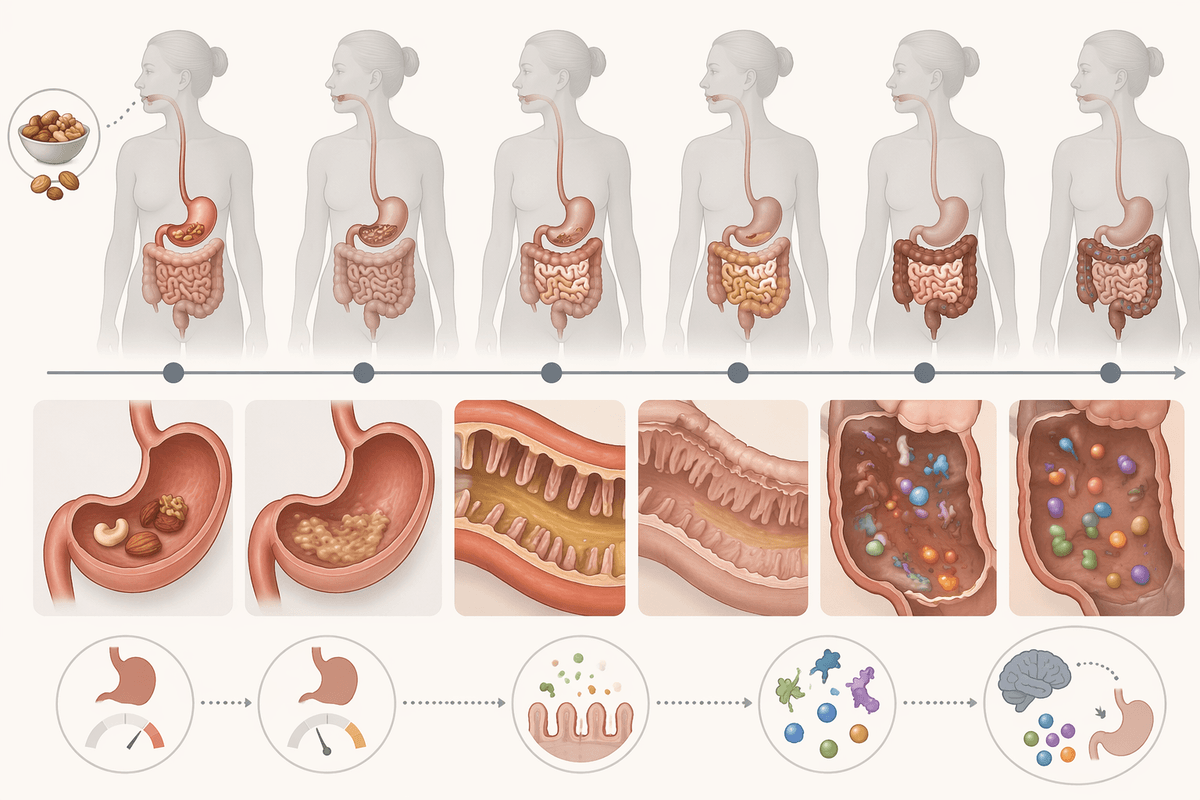
A few hours after a snack, you may notice a quieter kind of steadiness—less “snack chatter” in your head—even though you didn’t eat much more. That shift can feel inconsistent from day to day, which is part of what makes it easy to misread.
Some fibers don’t do much until they reach the large intestine, where gut bacteria start to ferment them. That fermentation produces short-chain fatty acids, which can influence how appetite signals are sent and received, including hormones tied to fullness. This effect can show up later than the quick “stomach feels full” feeling, so it may not match the moment you finish eating. And because your gut bacteria adapt to what you eat regularly, the same snack may feel more effective one week than the next.
If a “high-fiber” choice leaves you oddly hungry soon after, it may help to notice whether it’s a fast-digesting snack with fiber added, rather than one that tends to ferment and linger.
Crunchy, portable options that keep hunger quiet
The moment you hear a bag crinkle, it can feel like the problem is already solved—your mouth is busy, your hands are occupied, and the hunger edge softens. Then 30 to 60 minutes later, it may come back anyway, which can be especially frustrating when you’re between calls or stuck in the car with no real meal in reach.
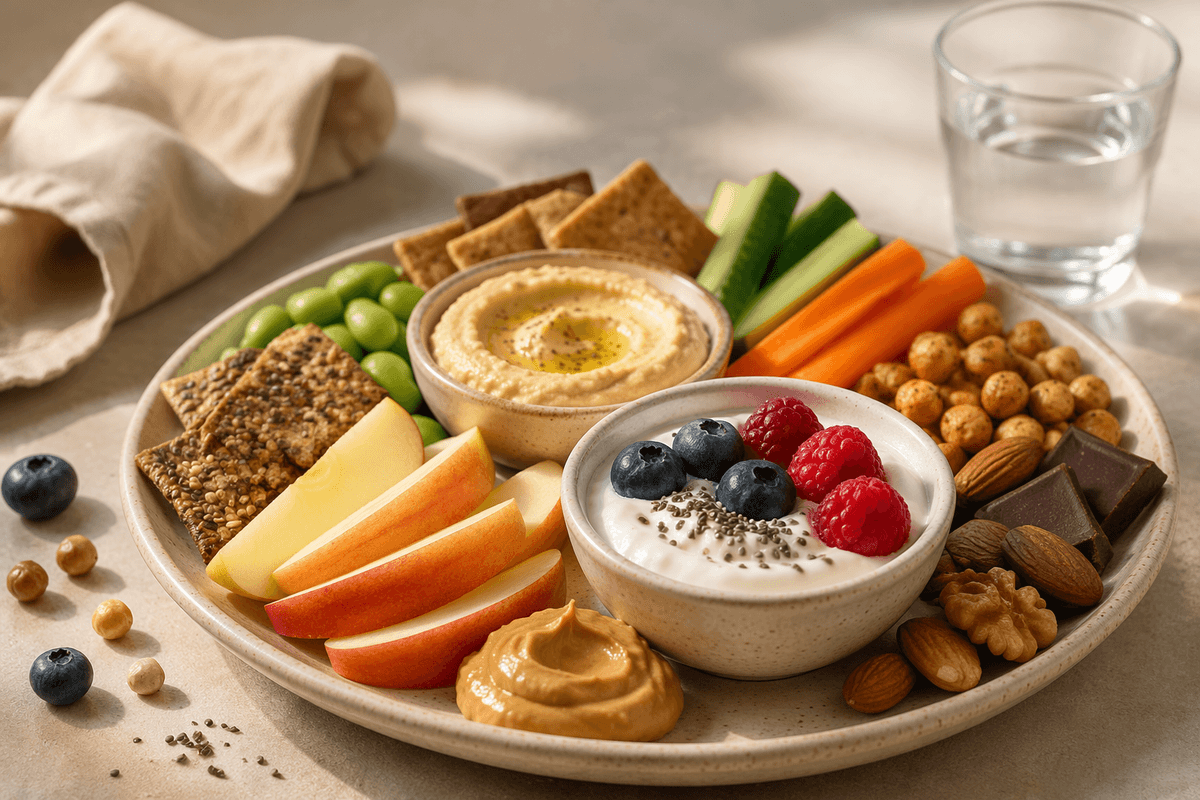
Crunch helps, but mostly for perception: it’s a clear “I’m eating” signal. What tends to keep hunger quieter is when the crunch comes with ingredients that slow stomach emptying and reduce the quick glucose rise-and-drop. In practice, that’s often a crunchy base (like roasted chickpeas or whole-grain crackers) paired with protein or fat (like a cheese stick, nuts, or a single-serve nut-butter pack). The pairing takes a little effort to plan, and it can feel inconsistent—some days it holds you for hours, other days stress makes the same snack feel like it “did nothing.”
A few portable combinations people often find more settling than a fiber bar alone include: apples with peanut butter, whole-grain crackers with tuna or hummus, roasted edamame, or trail mix that’s mostly nuts and seeds (not mostly dried fruit). If you notice you’re still scanning for food soon after, it may be less about willpower and more about how quickly that snack turns into absorbable fuel.
Creamy and slow-digesting snacks for steadier energy
Sometimes it’s not hunger that hits first—it’s that flat, slightly shaky drop in focus that makes a sweet snack feel urgent, even if you ate not long ago. Creamier snacks can feel more “settling” in these moments, partly because they tend to move through the stomach more slowly and create less of a rapid glucose rise-and-fall.
This usually comes down to texture and nutrients working together. When a snack has viscous soluble fiber (the kind that thickens) along with protein and fat, it can form a thicker mixture in the stomach and take longer to break down. Glucose may enter the bloodstream more gradually, which can make the brain’s “need something now” signal feel less intense. This steadiness can be subtle—especially on busy days—so it’s easy to misinterpret “I could eat” as “I have to eat.”
In real life, that often looks like options such as plain Greek yogurt with berries and chia, cottage cheese with sliced fruit, hummus or bean dip with whole-grain pita, or a small chia pudding made with milk or soy milk. They aren’t always as convenient as a bar, and portion sizes can feel inconsistent, but they tend to act more like a bridge to the next meal than a quick hit.
Sweet-seeming snacks that avoid the rebound hunger
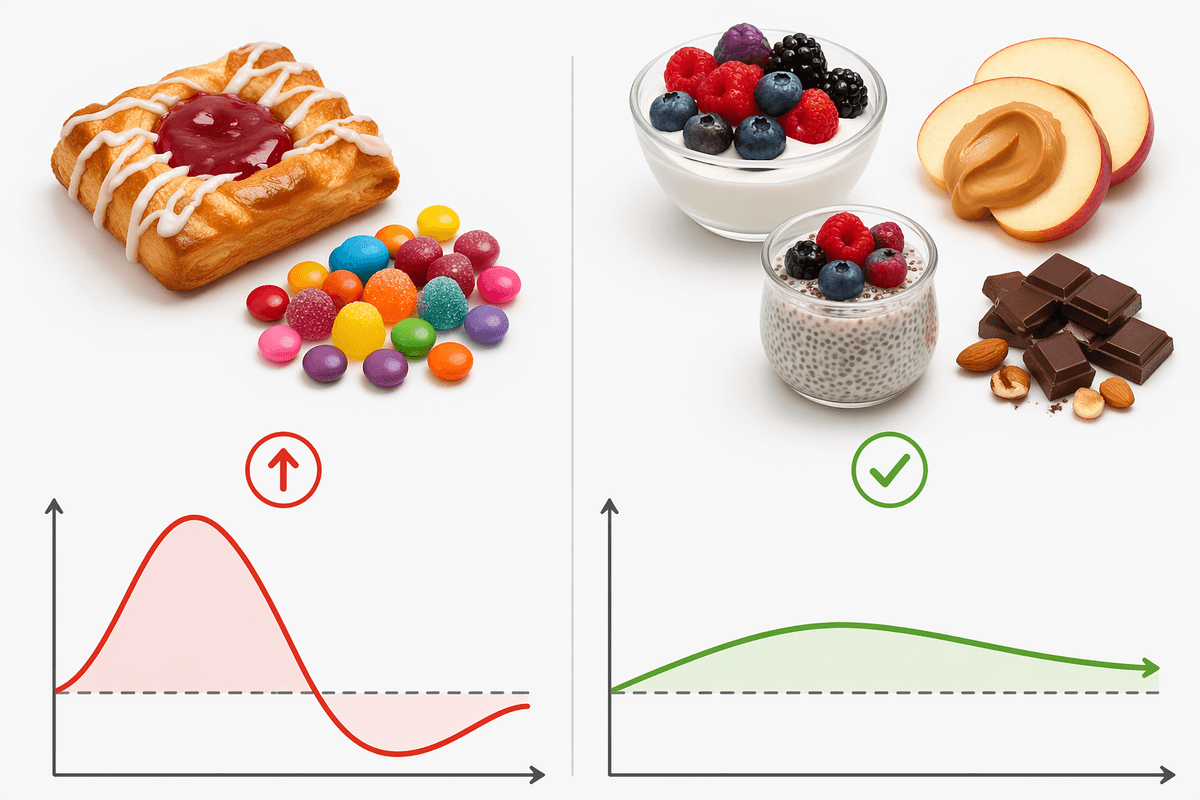
It’s often the “I just need something sweet” thought that shows up first—sometimes even when your stomach isn’t that empty. In the moment, a pastry or handful of candy can feel like it fixes the problem fast, but the fix can be short-lived, and the return of hunger can feel oddly sharp.
That rebound tends to happen when a sweet snack is mostly refined carbohydrate, which is absorbed quickly and doesn’t linger in the stomach. Blood glucose may rise fast and then fall sooner, and that drop can make appetite signals feel louder than you’d expect based on the calories you ate. When the sweet taste comes packaged with viscous fiber, protein, or fat, the mixture usually digests more slowly, so the “up and down” is less dramatic.
In real life, this can look like berries with plain Greek yogurt, an apple with peanut butter, chia pudding, or a few squares of dark chocolate alongside nuts. They still read as “sweet,” but they’re less likely to turn into a quick hit followed by an hour-later snack search.
When a “smart” fiber snack backfires unexpectedly
Sometimes the problem isn’t hunger at first—it’s that tight, bloated feeling after a “better” bar, followed by the urge to eat again anyway. That mix can feel inconsistent: one day it’s fine, the next day you’re distracted by your stomach and still thinking about food.
One reason is that some added fibers (like inulin/chicory root) ferment fast for certain people, pulling water into the gut and making gas and pressure build. Discomfort can get misread as “empty,” especially if you’re rushing and not noticing the difference between stomach fullness and gut irritation. And if the snack is also sweetened with sugar alcohols, the same “off” feeling may show up sooner.
Another quiet backfire is when a snack is high-fiber but still light on protein and fat: it can look “smart” on paper, yet behave like a quick carb once you’re back under stress. If you keep getting bloat, urgency, or rebound hunger after the same product, it may be worth treating that as a useful signal—not a failure.