Asparagus seems simple, but nutrition is layered
The first thing you might notice isn’t “nutrition” at all—it’s how a few spears can leave you feeling unexpectedly satisfied, even though the plate doesn’t look that different. That can be confusing if you’re used to judging a vegetable by how heavy it feels, or you’re not sure it really “counts” as a filling side.
Part of what’s going on is that asparagus brings more than water and crunch. Its mix of fiber and prebiotic-type carbs can slow how quickly a meal moves and how fast sugars are absorbed, which may translate into steadier energy and fewer “still hungry” moments. But the same carbs can also be fermented by gut microbes, so the payoff isn’t always immediate—and for some people, it shows up later as extra gas or a slightly different stool pattern.
On top of that, asparagus adds folate, vitamins K and C, and potassium—nutrients that support everyday repair and fluid balance in the background, even when you can’t feel them working.
Fiber types that change digestion and fullness
You may notice it most when you stand up after dinner and realize you’re not scouting the pantry an hour later. It can feel a little inconsistent—one night asparagus seems to “hold you,” and another night it barely registers—especially if the rest of the meal changes.
Part of that comes down to different kinds of fiber working at different speeds. The more gel-forming, soluble-type fibers can thicken what’s in the gut and slow how quickly carbs and fats mix with digestive juices, which may help blunt a fast rise-and-fall in hunger. The more structural, insoluble-type fibers add bulk and friction, nudging material along and making fullness feel more physical. Asparagus has some of both, but the effect is usually subtle unless the meal around it is more refined.
If you pair asparagus with a high-starch or sugary main, you might notice the “steady” feeling more than if you pair it with protein and fat, where fullness is already strong. And if your portion jumps quickly, the same fibers can pull in water and get fermented later, so fullness may come with a bit of pressure or a delayed, gassy edge.
What drives prebiotic benefits beneath the surface
A day or two later, it may be your bathroom routine—not your appetite—that tips you off something is shifting. It can be easy to misread that change as “asparagus didn’t agree with me,” especially if you notice a little extra puffiness or a different smell and you can’t connect it to anything you did differently.
What’s happening under the surface is that some of asparagus’s carbs act less like calories you absorb and more like fuel that keeps moving until it reaches the colon. There, gut microbes can use those compounds (often including inulin-type fructans) as a food source. As they break them down, they produce gases and short-chain fatty acids, which can influence how the gut lining handles fluid and how strongly the colon contracts. That can mean softer, easier stools for some people, while others mainly notice pressure or rumbling—especially if their usual fiber intake is low or the portion jumps.
Prebiotic effects are often delayed and a bit inconsistent, because your microbiome adapts based on what it’s regularly fed, not just one meal. So the same asparagus side can feel “calm” one week and noticeably fermentable the next, depending on everything else you’ve been eating around it.
Folate, vitamin K, and antioxidant repair roles
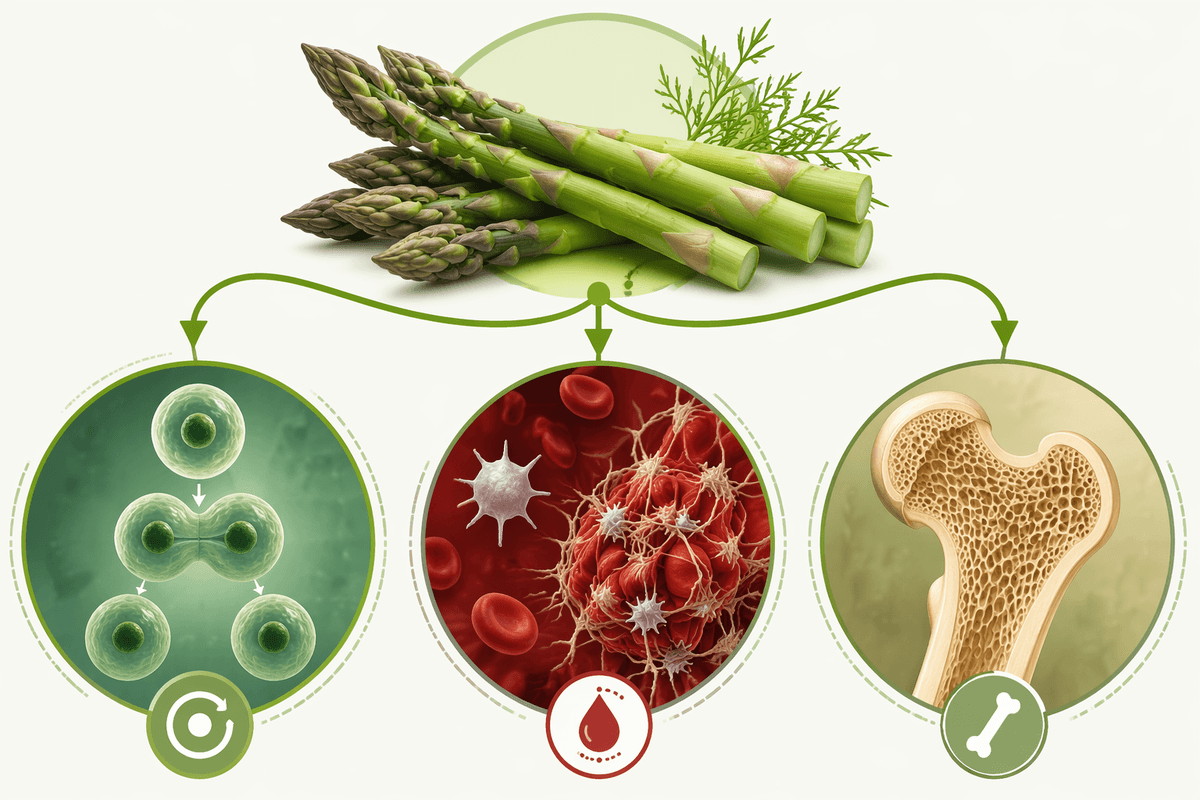
Sometimes the only hint is a low-level steadiness—less of that “run down” feeling after a long day—yet it’s hard to tie it to a vegetable because nothing dramatic happens. That uncertainty is part of why asparagus can get filed under “just a side,” even when it’s quietly adding nutrients your body uses for routine upkeep.
Folate is one of those background nutrients. Your body uses it to build and maintain cells, especially in tissues that turn over quickly. When intake is spotty, people can misread the resulting drag as poor sleep or not enough protein, because the sensation doesn’t point clearly to “folate.” Asparagus also contributes vitamin K, which supports normal blood clotting and bone-related processes; it’s easy to overlook until you realize you can go days without eating a meaningful source.
Then there’s the antioxidant side—vitamin C and plant compounds that help limit oxidative wear from everyday metabolism. You typically won’t “feel” that protection in real time, but across weeks it may be part of why meals built around vegetables tend to feel a little easier to recover from, even if your digestion still has occasional, inconsistent bloating along the way.
Why asparagus can act mildly diuretic
You might notice it on an ordinary afternoon: a couple of bathroom trips that feel a little closer together than usual. It’s easy to chalk it up to “drinking more water,” but the timing can feel inconsistent—especially if you didn’t change your fluids much.
Asparagus is mostly water, but it also brings potassium, which is one of the minerals your kidneys use to help manage sodium and fluid balance. In some cases, a higher-potassium, lower-sodium food pattern can nudge the body to let go of a bit more sodium in urine, and water often follows. Some compounds in asparagus (including the amino acid asparagine) have also been linked with a mild diuretic effect, though it’s not usually dramatic.
More frequent urination can feel like “it’s flushing me out,” but it may just be a small shift in electrolyte handling—worth noting if you’re already on a diuretic or managing kidney issues.
When healthy servings cause smell or bloating
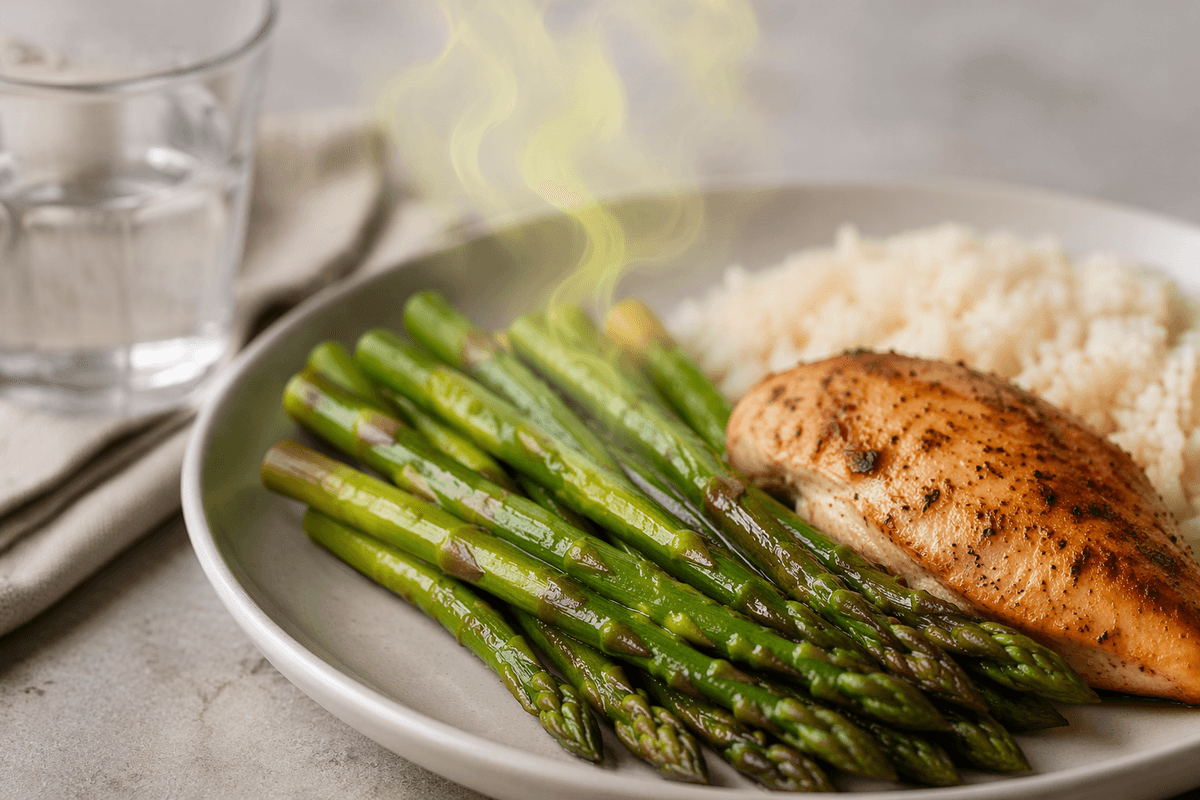
It can catch you off guard when the bathroom smells sharper than usual the next morning, even though you didn’t feel “off” after dinner. Some people also notice their urine has a distinct sulfur-like odor, and it can feel oddly personal—like something went wrong—when it’s really just a normal variation that not everyone experiences.
One reason is that asparagus contains sulfur-containing compounds that can be broken down into volatile sulfur molecules as your body processes them, and those can leave the body in urine. Not everyone makes or detects these compounds the same way, which is why one person may notice it strongly while another swears nothing changed.
Bloating is a different annoyance, and it can be more uncomfortable than the smell. If your portion is bigger than usual, some of the same prebiotic-type carbs and fibers may reach the colon and get fermented by gut microbes, producing gas. Sometimes it shows up hours later—so it’s easy to blame the wrong food if it keeps happening.
Everyday meal ideas that keep nutrients intact
It’s often the weeknight rush that changes how asparagus “lands”—when you’re hungry and tired, the extra step of careful cooking can feel like too much effort, so it gets overcooked into something limp. That’s when people assume it’s mostly water, because the flavor dulls and the meal feels less satisfying than they expected.
Quick heat tends to keep it more intact. A fast roast or sauté until it’s just tender-crisp can preserve its texture, which is part of what makes the fiber feel filling. Pairing it with a steady base—eggs, salmon, chicken, tofu, lentils, or a bean salad—often makes the fullness easier to notice without pushing portions so high that fermentation turns into uncomfortable gas later.
If you’re using it in pasta, soup, or a stir-fry, it can help to add the spears near the end so they don’t simmer for too long. And if you’re on a blood thinner, it’s worth keeping your vitamin K intake consistent rather than swinging from “none” to “a lot” in one meal.