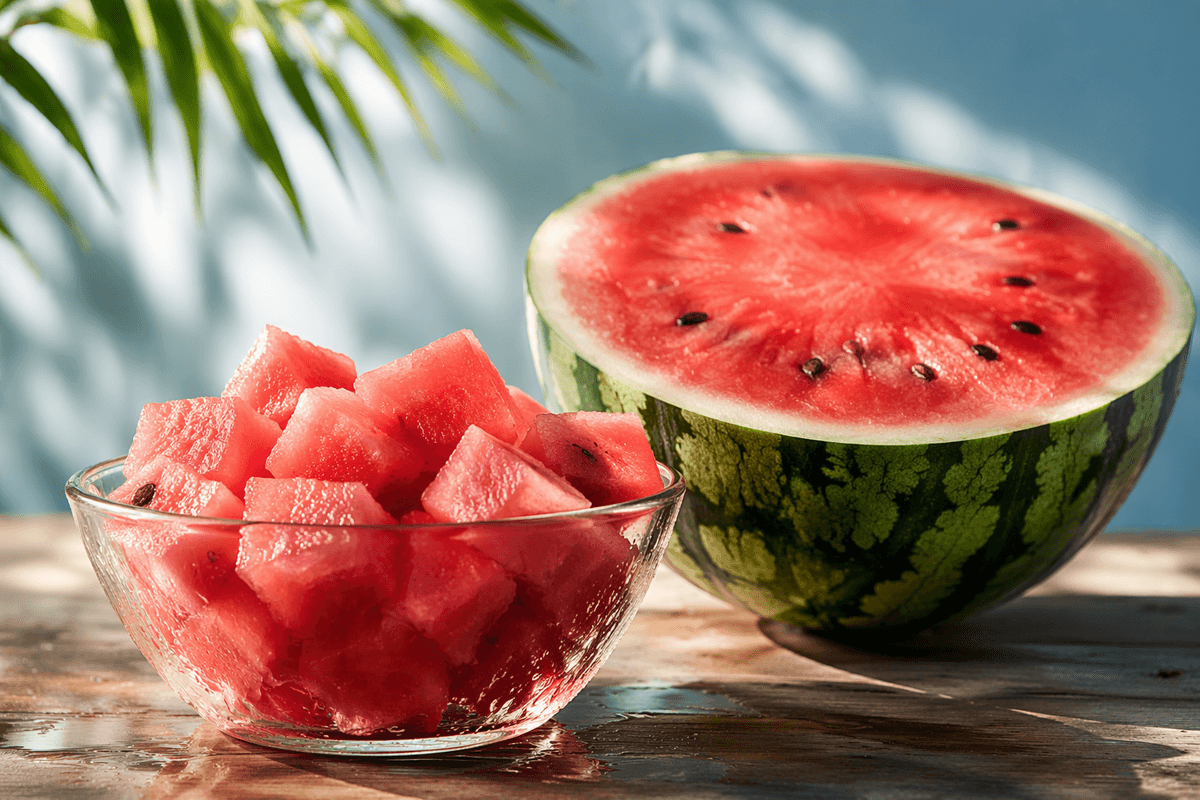
Why strawberries can sting lips and tongue
It can start as a quick prickly feeling right where the berry touched—lip edges, the tip of the tongue, the corners of the mouth. Because it happens fast, it’s easy to assume “I’m allergic,” even if the rest of your body feels normal and the discomfort fades once you stop eating.
Strawberries are both juicy and “busy” on the surface. Their tiny seeds and rough skin can act like mild sandpaper on already-dry lips or a mouth that’s a little irritated from cold air, spicy foods, or brushing too hard. At the same time, the fruit’s natural acids can sting small cracks you might not even notice until something sharp hits them.
The sensation may stay exactly where the strawberry juice sat, and it may change from day to day depending on how sensitive your skin barrier is that week—especially during allergy season, when mouths and noses often run a little inflamed without people realizing it.
Skin flare-ups after berries aren’t always allergy
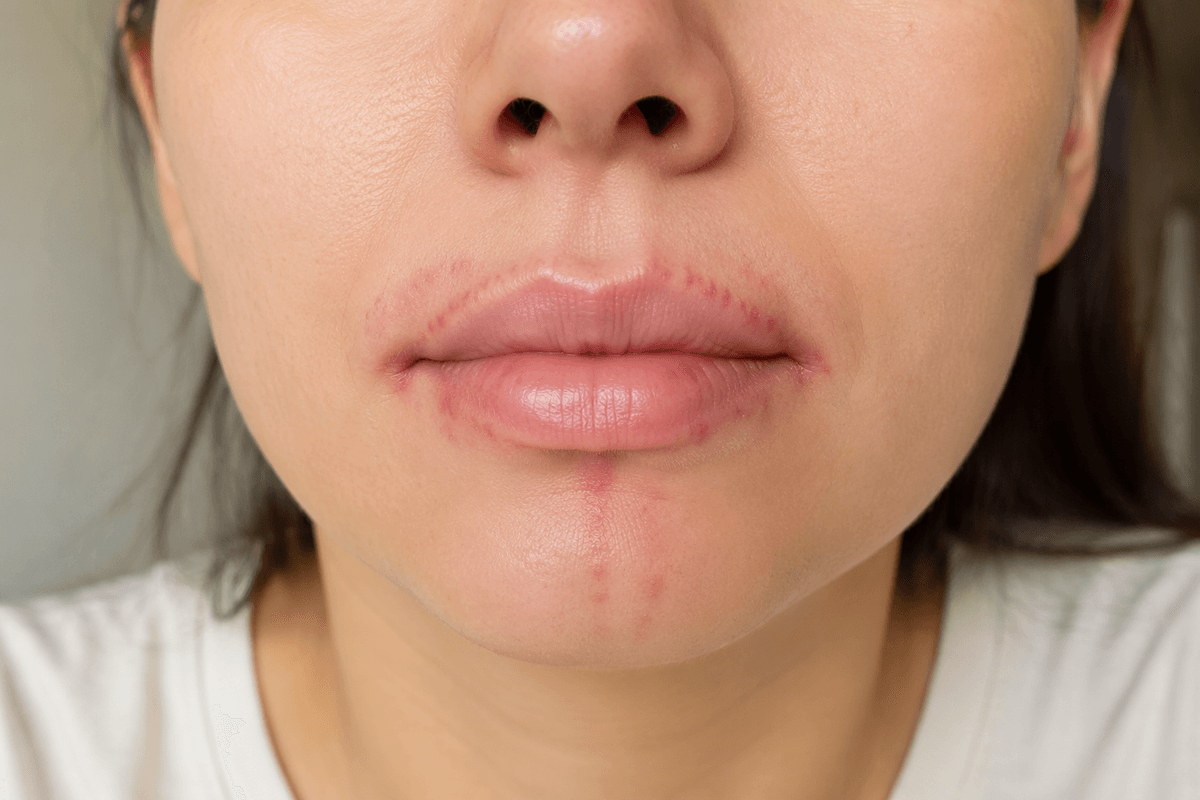
Sometimes the first thing you notice isn’t in your mouth at all—it’s a faint red outline where juice hit your skin, or a few itchy bumps at the lip line that show up after you’ve already swallowed. That delay can feel inconsistent and hard to read, especially if it doesn’t happen every time or only shows up when your skin is already a little dry or rubbed.
Not every flare like this behaves like a classic food allergy. In some cases, the reaction stays limited to “contact zones” because the outer skin barrier is doing most of the work: acids and small plant compounds can irritate tiny breaks, and friction from wiping can keep the area reactive. When your barrier is leaky—chapped lips, eczema-prone skin, or irritation from frequent nose blowing in allergy season—your nerve endings and local immune cells can respond more sharply, even without a whole-body allergic response.
A rash that tracks the drip line on the chin or concentrates at mouth corners often points to what touched the skin, not what traveled through the bloodstream—and it can look more dramatic than it actually feels.
Acids and enzymes: the simplest irritation pathway
It’s often most noticeable on a day when your lips feel a little tight—then a bite of strawberry lands and the sting feels oddly “bright,” like it’s finding every tiny rough spot. The discomfort can be out of proportion to what you can see in the mirror, which is part of why it’s so easy to misread as a sudden allergy.
One straightforward pathway is irritation. Strawberries are naturally acidic, and acid tends to light up exposed nerve endings in small cracks or inflamed tissue. If the surface of your lips or the lining of your mouth is already thinned out from dryness, frequent wiping, or seasonal inflammation, that acidity can cause a sharp, local burn that stays right where the juice sat.
They also contain active plant proteins (including enzymes) that can act like tiny chemical “helpers,” softening the very top layer of cells. That doesn’t mean something is dangerous—it can simply make the surface a little more permeable for a short window, so the next swipe of juice stings more than the first, or a second berry suddenly feels worse even if the amount was small.
What drives this pattern beneath the surface
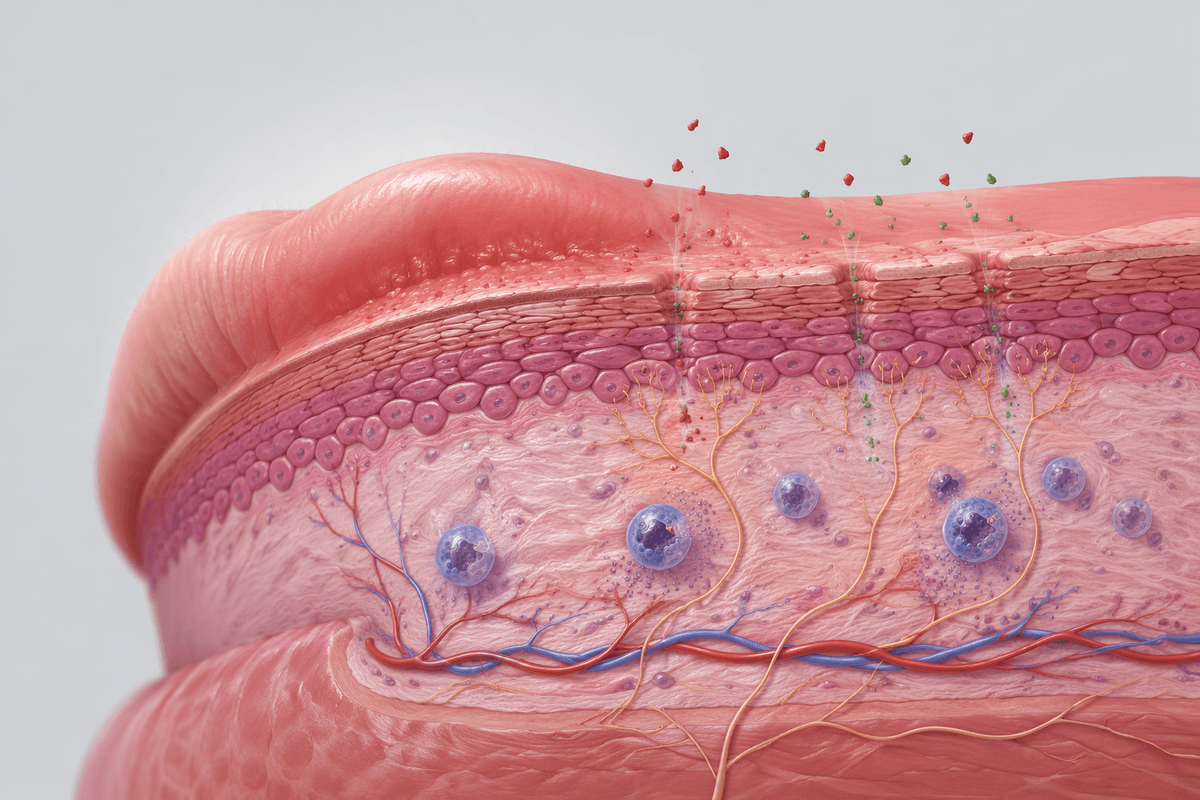
On some days it’s just a faint tingle, and on others the same berry seems to “catch” on your mouth in a way that feels disproportionate. That inconsistency often isn’t about the strawberry changing—it’s about the tissue you’re putting it on, and how primed it already is.
When the lip line or oral lining is even slightly inflamed, the surface barrier can be thinner and more permeable. That makes acids and small plant compounds more likely to reach superficial nerve endings, so the sting registers faster and louder. At the same time, local immune cells in the skin and mucosa—especially mast cells—can be more reactive during allergy season, releasing histamine in a very targeted way right where contact happened. That can look like “mini hives” at the border of the lips without turning into a whole-body reaction.
A small amount may do nothing until friction, dryness, or repeated bites add up, and then symptoms appear late—making it feel unpredictable even when the underlying process is fairly local.
Pollen-food cross-reactions in sensitive immune systems
It can feel oddly specific: the berry tastes fine, but within minutes your lips or the roof of your mouth starts itching in a way that reminds you of a scratchy throat during spring allergies. Then it fades, sometimes before you’ve even finished your snack, which can make it hard to take seriously—or hard not to.
In some people, this pattern is less about the fruit “burning” and more about mistaken identity. During pollen season, the immune system may be primed to recognize certain pollen proteins, and a few proteins in fresh fruits can resemble them closely enough that the body reacts as if pollen just landed on the mouth. That local, cross-reactive response can nudge mast cells in the oral lining to release histamine right at the contact surface, leading to quick itching, tingling, or a mild lip-line welt without broader symptoms.
Raw fruit tends to cause more trouble than cooked or processed forms, and the same person may react more when their seasonal allergies are flaring. If the sensation keeps spreading beyond the mouth or starts happening with other foods, it may be worth treating that change as a signal rather than assuming it’s “the same thing.”
Why washing or eating more can backfire
It’s a small trap: you rinse the berries extra well, take another bite, and the tingle gets sharper instead of settling down. That can feel backwards, especially when you’re trying to “prove” it’s just surface residue or that your mouth will get used to it.
With irritation, washing doesn’t change the strawberry’s natural acids or active plant proteins, and a wet berry can spread more juice across the lip line and mouth corners. If your skin barrier is already a bit cracked, that wider contact area can expose more nerve endings, so the sting feels bigger even when nothing “new” was added.
Eating more can also push you past a threshold. Repeated bites mean repeated friction and longer contact time, which can keep the surface tissue slightly disrupted. And if your pattern is a pollen-food cross-reaction, more fresh fruit may simply deliver more of the look-alike proteins to the same sensitive lining—so the reaction stays local, but feels harder to ignore.
Clues that point to irritation versus true allergy
It’s often the “shape” of the reaction that gives you the first clue—whether it stays pinned to the exact touch points or starts behaving like something your whole body is involved in. A sting that maps to the lip edge, mouth corners, or a small spot on the tongue can be frustratingly intense, but it may still be local, especially if it fades quickly once you stop and doesn’t show up elsewhere.
Timing and form matter, even when they’re inconsistent. Irritation tends to feel more like burning or rawness, and it often tracks with chapped skin, recent brushing, cold air, or repeated wiping; it can also build with a few bites as the surface gets more disrupted. A pollen-food cross-reaction more often shows up as fast itching or tingling in the mouth with raw fruit, sometimes easing with cooked or processed forms.
What usually raises the stakes is when symptoms aren’t confined to contact areas—hives beyond the mouth, swelling that keeps progressing, vomiting, wheezing, or lightheadedness. If that pattern shows up, or if reactions are escalating over time, it’s worth treating it as more than simple irritation and getting medical guidance before testing it again.