Spicy meal, racing pulse, and warm skin
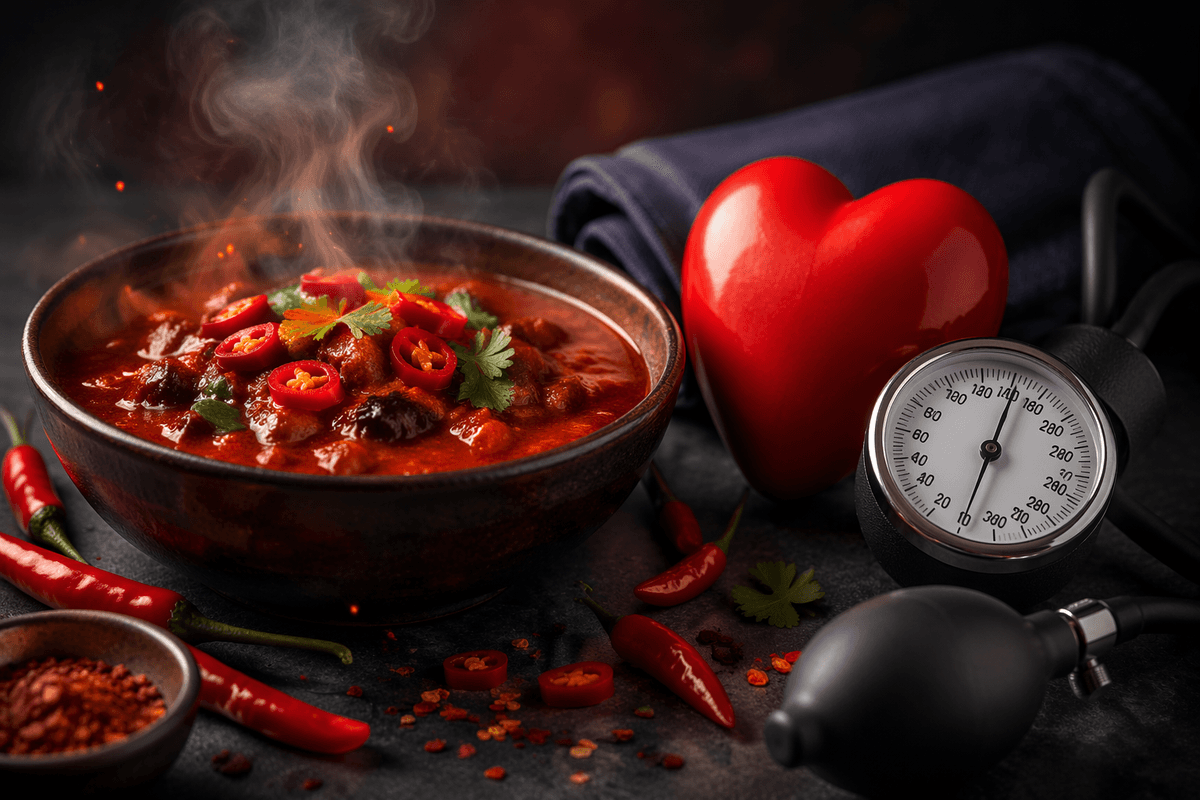
The first bite can come with a quick warmth that spreads up the neck and face, like someone turned up the thermostat from the inside. Your skin may flush, you might sweat, and your pulse can suddenly feel loud enough to count without trying—which can be unsettling if you already watch your numbers.
This reaction doesn’t always mean your blood pressure is rising in the same way it feels. Capsaicin (the “heat” in chili peppers) can switch on pain-and-heat sensors in the mouth and gut, and that nerve traffic can nudge the body into a brief stress-style response: faster heart rate, more sweating, and a stronger awareness of each beat.
At the same time, some blood vessels near the skin may open up, which can make you feel “wide open” or lightheaded even if a cuff reading later looks inconsistent. That mismatch is a big part of why spicy meals can feel dramatic, but measure differently.
Blood pressure numbers versus blood flow feel
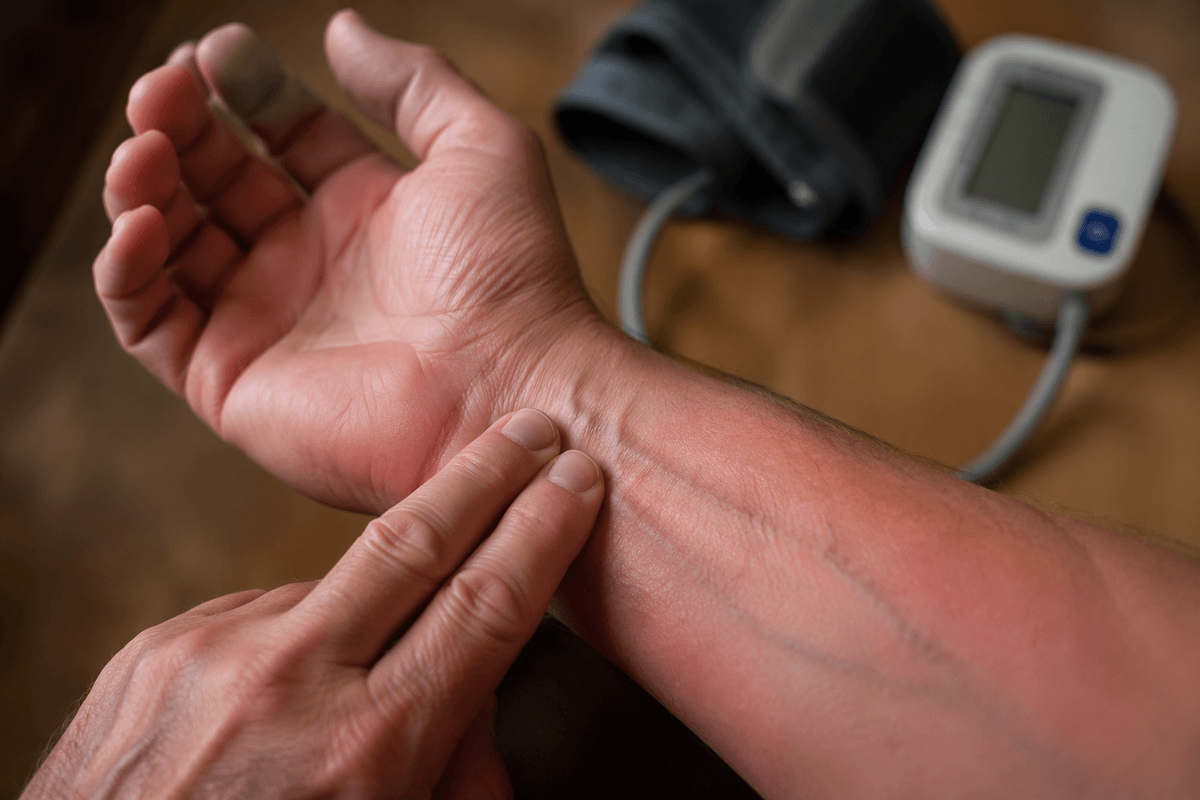
Sometimes the confusing part is how “full” your pulse can feel even while your hands or face are getting hotter. That can create the impression that pressure must be climbing, when what you’re noticing may be a shift in where blood is flowing—more toward the skin and away from deeper circulation.
A home cuff, though, only reports pressure inside a brachial artery for a few seconds. It doesn’t measure the wider pattern of vessel opening and tightening happening across the body. If surface vessels relax while other areas tighten to keep overall circulation steady, your symptoms can feel intense even when the number barely changes—or the number can jump even when you feel oddly light and flushed.
That mismatch is why a single reading after a spicy meal can be hard to interpret. Timing, posture, and how long you’ve been sitting still all add inconsistency, especially if you’re already on the edge of higher readings.
Capsaicin and nerves that open blood vessels
You might notice it starts in one small spot—the lips tingling, the tongue stinging—then the heat seems to “move” even though the food is already swallowed. That spread can feel like circulation changing on purpose, but it’s often a nerve reflex more than a sign of blood pressure moving in one clear direction.
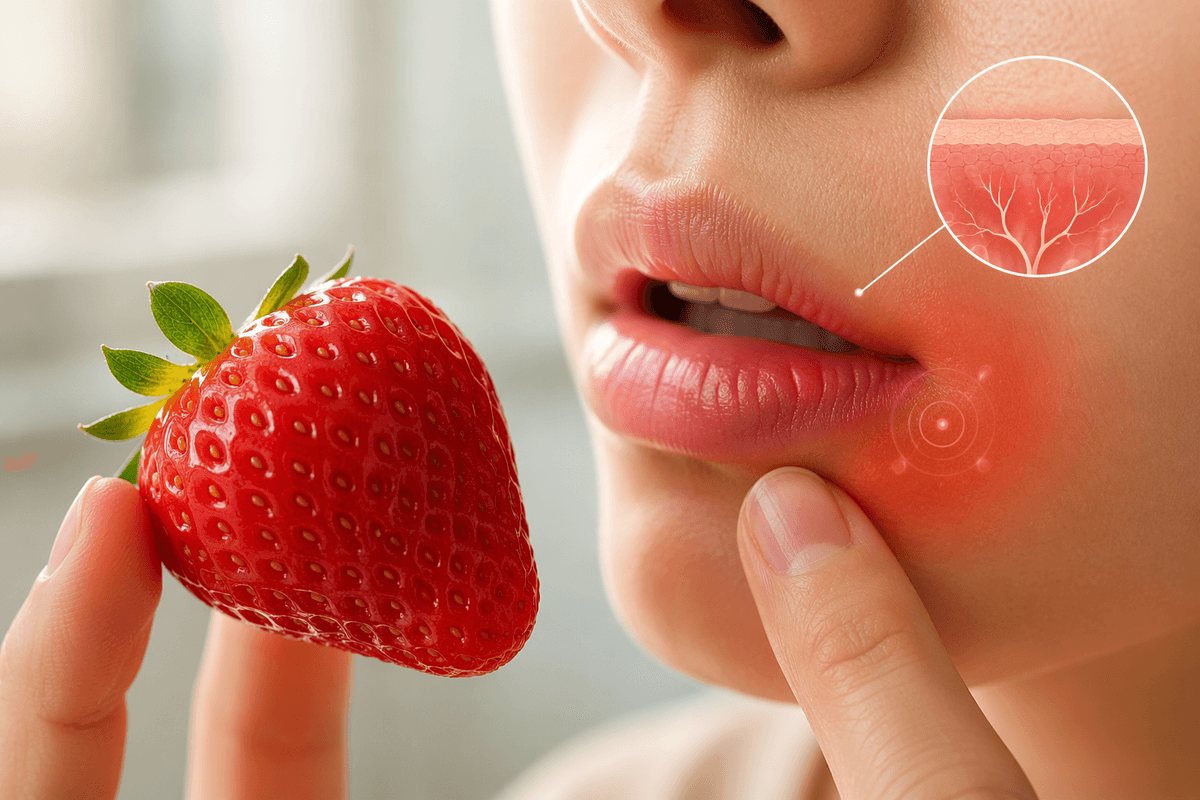
Capsaicin binds to a heat-and-pain sensor on nerve endings (often called TRPV1). Those nerves don’t just send a message to the brain; they can also trigger local chemical signals that relax nearby blood vessels, especially closer to the skin. In some cases, that opening is part of why the face gets red and why sweat shows up quickly—your body is acting as if it needs to dump heat, even though the “heat” is coming from a chemical signal, not a rise in temperature.
At the same time, your body still tries to keep overall circulation stable. If more blood is being sent toward the surface, other vessels may tighten a bit to compensate, and the heart may beat faster to maintain flow. That push-pull can create an inconsistent mix: a stronger, more noticeable pulse with flushing, and a reading later that’s either unchanged or unexpectedly higher, depending on timing and how your system balances it in that moment.
What drives this pattern beneath the surface
It can feel like your heartbeat is “in your throat” for a few minutes, even if you’re sitting still. That intensity often comes from how the nervous system amplifies each beat—so the sensation can rise faster than any number you’d see on a cuff, and it doesn’t always follow a tidy pattern.
Underneath, there’s a tug-of-war between local vessel opening and whole-body control. Capsaicin-driven signals can relax surface vessels, while the body’s autopilot (the sympathetic nervous system) may simultaneously increase heart rate and the force of contraction to keep blood moving where it’s needed. If your brain interprets the mouth-and-gut “heat” as a stressor, adrenaline-like signals can add a brief surge of alertness, sweating, and a pounding pulse even without a true emergency.
Blood flow shifts toward the stomach and intestines after a meal, and your baroreflex adjusts vessel tone beat-to-beat to hold pressure steady. When those adjustments are a little delayed—because you’re warm, talking, standing up, or simply keyed up—the result can be an uncomfortable, inconsistent mix of flushing, faster pulse, and readings that don’t match how you feel.
Why some people see spikes on home cuffs
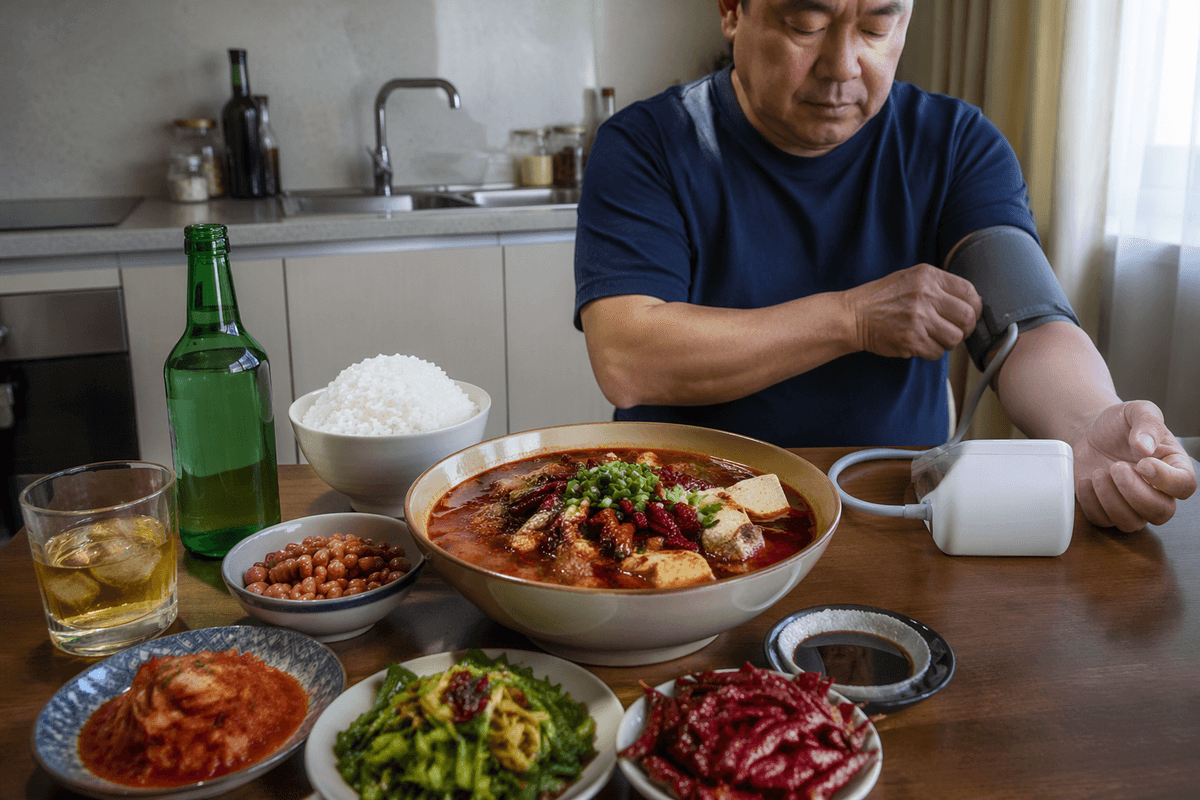
It’s often the moment you finally sit down with the cuff—still warm, a little sweaty, and paying close attention—when the number comes back higher than you expected. That can feel like proof the spice “spiked” your blood pressure, even though the timing is rarely that clean.
Home readings can jump for reasons that have nothing to do with capsaicin itself. If you measure right after standing at the stove, talking through the meal, or with your arm not fully supported, the sympathetic “revved up” state can carry into the measurement and tighten the arm arteries the cuff is sampling. Even a slightly fast breathing pattern or a tense jaw can push the result upward for that one snapshot.
The meal around the heat matters, too, and it’s easy to misread the cause. Spicy foods are often paired with salty sauces, or larger portions, which can shift fluid balance and nudge pressure higher over the next hour or two. So the flush may fade while the cuff rises later, creating an inconsistent pattern that looks like “spice did it,” when it may be the full meal plus timing.
When a ‘healthy’ spicy habit backfires unexpectedly
It usually shows up on an ordinary night: the same hot salsa or chili you’ve been proud of eating “for your heart,” but this time you feel jittery afterward, and the warmth doesn’t settle as quickly. You may even notice a dull pressure in your head or a harder, thudding pulse when you finally lie down—small signals that don’t line up with the idea that spice is automatically doing something protective.
One reason it can backfire is that the spicy sensation can quietly stack on top of everything else your body is already managing. If you’re tired, dehydrated, stressed, or coming off a poor night of sleep, the nervous system can be easier to tip into a higher-alert state. In that setting, the same capsaicin-triggered reflex that opens surface vessels can also come with a stronger sympathetic response—tighter deeper vessels, faster heart rate, and a greater tendency to “hold on” to pressure rather than smooth it out.
And sometimes it isn’t the heat at all—it’s the pattern around it. “Healthy spicy” can still mean salty broth, pickled toppings, restaurant portions, or a couple of drinks, and those can shift fluid balance later than the flush. If this keeps happening or feels more intense than usual, it may be worth treating it as a data point rather than a verdict about spice.
Longer-term patterns: tolerance, diet quality, salt
After a few weeks of eating the same level of heat, the reaction often stops being dramatic. The flush may be smaller, the pounding feeling less attention-grabbing, and that can look like “my blood pressure is better now”—even when what’s really changed is how strongly your nerves respond to the signal. Repeated TRPV1 stimulation can produce a kind of sensory downshift, where the alarm feels quieter, but it doesn’t guarantee the rest of the meal is neutral.
Over time, the bigger pattern is usually what travels with the spice. A homemade chili with beans and tomatoes can land very differently than wings, ramen, or takeout curry, where sodium is doing slow work in the background—pulling fluid into the bloodstream and raising pressure later, sometimes after the warm-face feeling is already gone. That timing mismatch is why logs can feel inconsistent: the “heat symptoms” may fade fast, while salt-related effects can show up hours later or the next morning.
If your readings are drifting upward across days rather than bouncing for 20 minutes, it may be less about capsaicin and more about the overall mix—salt, portion size, and sleep—adding up in a way that’s easy to miss until the numbers stay high.