Why Budapest escape rooms work for groups
We almost bailed on booking an escape room because eight people felt like “too many,” but Budapest rooms are built for that exact long-weekend problem: one hour, one bill, and everyone’s doing something. The catch is that big groups can turn into spectators if the room isn’t designed for parallel puzzles.
What makes Budapest especially group-friendly is variety at the mid-budget level—serious puzzle boxes, story-forward sets, and horror-leaning runs—so you can match the vibe instead of forcing consensus. Still, the more cinematic the room, the more you’re paying for atmosphere, and sometimes the puzzle depth gets simpler to keep the pace moving.
For mixed experience levels, escape rooms work because communication matters more than “being smart,” and the timer keeps decisions crisp. But they punish late arrivals: a 10-minute delay can mean a shortened game or a rushed briefing, and in peak evening slots you may not get flexibility.
Choose by theme, difficulty, language, location
We got stuck at the first real decision: pick “the coolest theme” or pick what our group could actually solve. Theme matters because it sets expectations—horror rooms can be brilliant for adrenaline, but if two people hate jump scares, you’ll spend money to watch them disengage. Mystery/heist themes tend to play better for mixed crews because the tension comes from collaboration, not fear, and people who are quieter still contribute by pattern-matching or organizing clues.
Difficulty is the next filter, and Budapest rooms aren’t always calibrated the same way across companies. If you’ve got first-timers in a group of 6–8, I’d bias “medium” and ask one blunt question when booking: do you expect most teams to escape without heavy hinting? If the answer is “rarely,” that’s not a badge of honor—it’s a risk of frustration, especially if you’re trying to make this the standout activity of the weekend.
Language can be the hidden dealbreaker. Many rooms run smoothly in English, but “English available” sometimes means the game master can brief you, while in-room text, audio, or wordplay still leans Hungarian. If your group isn’t comfortable improvising around that, confirm (1) the room can be hosted fully in English and (2) whether puzzles rely on nuanced reading. Location is the last sanity check: pick something central (Deák Ferenc tér / Astoria-ish) if you’re coming from dinner, because cross-town transit plus one late friend is how you lose your time slot.
Top Budapest escape rooms by group style
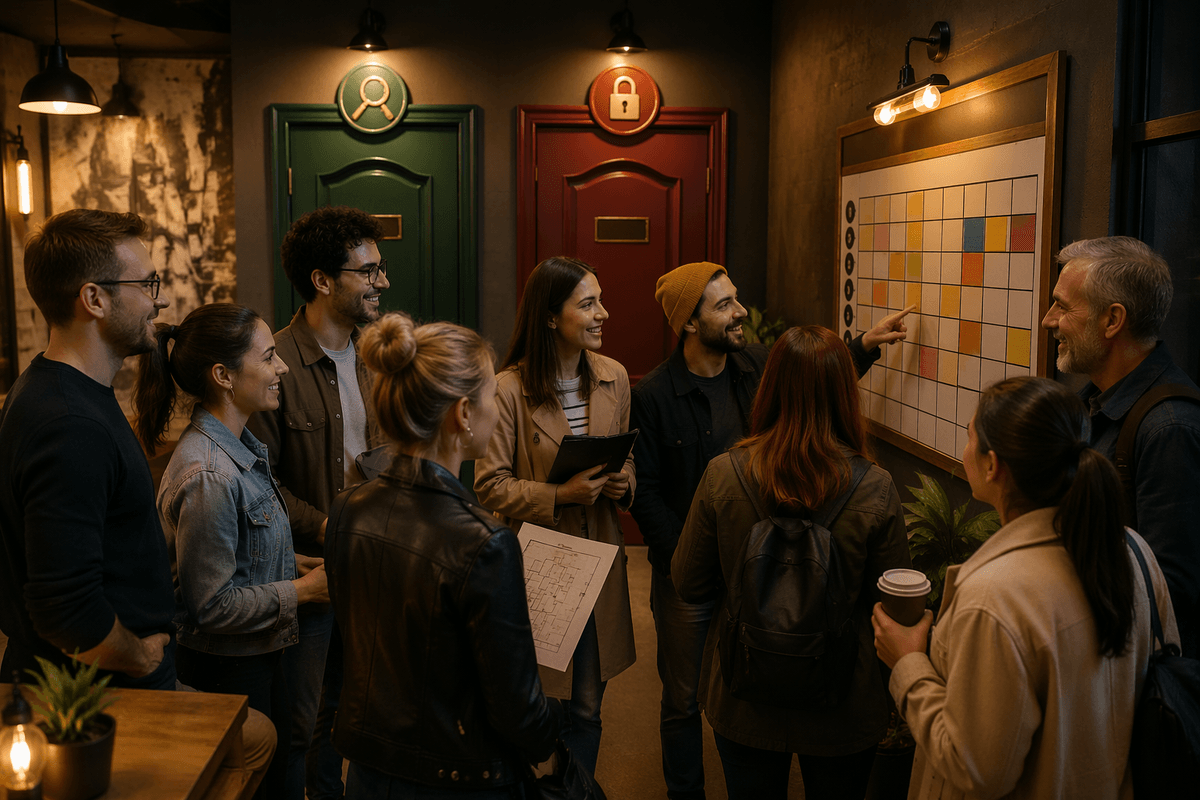
At some point your group will do the “one room for eight people?” math and realize the cleanest plan is sometimes two rooms at the same venue—especially if you’re coming from dinner and you can’t afford a late start. The places that make this painless are the ones with a deep menu of games and solid English hosting, because you can book parallel time slots and regroup after without a cross-city shuffle.
If your crew is mixed—some first-timers, some competitive types—Locked Room Budapest is the “safe pick” style: lots of different games and a clear promise that everything is playable in English, which reduces the risk of one person getting stuck translating while everyone else waits. The thing to watch is pacing: with 7–8 people, even a well-run room can turn into a few leaders sprinting ahead unless you intentionally split roles (one person tracks inventory, one maps locks/keywords, two stay on “search,” etc.).
If you want “Budapest’s escape-room night” to feel like an event, Neverland is built for that—multiple themed rooms in one spot, plus the obvious advantage of an on-site bar/food plan so you’re not herding everyone to a second location afterward. The constraint is popularity: prime weekend slots can disappear early, and if you’re trying to keep the group together, you may need to pick the room that fits the time rather than the theme you’d rank first.
For the puzzle-forward crowd that gets itchy with “mostly atmosphere,” E-Exit leans into creative mechanics and challenge—great when you’ve got at least a couple of people who like being stuck for a minute and working a system. But several of their games cap smaller teams, so with 6–8 you’re usually committing to a split—and that only works if your group won’t turn the post-game debrief into a “which team was better” scoreboard.
Wrap-up: pick one that fits your crew
We made the call by working backward from what would actually ruin the night: a half-English room, a cross-town sprint, or a difficulty spike that leaves two people quietly checking out. If you want the lowest-risk “everyone participates” choice, prioritize a venue with consistent English hosting and enough puzzle parallelism for 6–8. If your group treats this as the weekend’s main event, choose the place that can absorb delays (and keep you together afterward), even if that means compromising on your second-favorite theme.
When you book, decide upfront: one room for all of you, or two rooms at the same time. Two rooms reduces crowding and helps mixed skill levels, but it can also split the vibe if your group hates comparing outcomes. Either way, pick a time with a buffer before dinner plans, arrive early enough for a full briefing, and treat “we’ll be on time” as a plan—not a hope.