With its unique blend of European elegance and Latin American flair, Buenos Aires offers first-time visitors an unforgettable adventure. Argentina can be regarded as a city of both fantasy and polarity, starting at its ancient streets of San Telmo, and the colorful houses of La Boca. This guide will make it easy to pursue the fundamentals of navigation, allowing you to enjoy this trip to the fullest.
Master the Art of Argentine Time
The porteinos (BA residents) live with their distinct time, whose reality may not be pleasant to foreigners. Dinner does not begin until 9 PM, and most restaurants do not open their doors before 8 PM. In the case of lunch, they usually take place between 1 PM and 3 PM, and it will not be shocking to find shops shutting down at siesta time.
The schedule is even later. It is 2 AM or 3 AM before restaurants are in their stride. Be conscious of how you will be sleeping, because for part of the time, you will be interested in experiencing the legends of Buenos Aires.
Navigate the Neighborhoods Like a Local
Buenos Aires is a city that spans over 48 distinct neighborhoods, each with its own unique personality and attractions. Make time in these newcomer-friendly areas:
- Palermo serves as the city's trendy heart, boasting a plethora of boutique hotels and innovative restaurants. The sub-neighborhoods of Palermo Soho and Palermo Hollywood offer the best concentration of activities for visitors.
- Recoleta showcases Buenos Aires' most elegant side, home to the famous cemetery where Eva Perón rests, upscale shopping, and beautiful Belle Époque architecture.
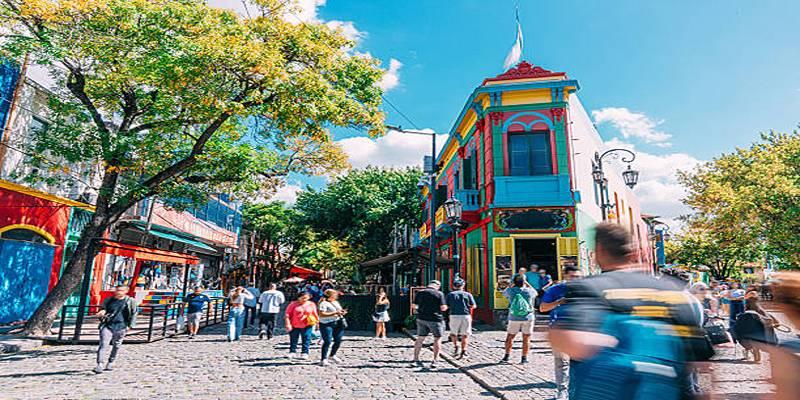
- San Telmo preserves the city's bohemian soul with its Sunday antique market, tango shows, and historic colonial buildings.
- Puerto Madero represents modern Buenos Aires, featuring waterfront dining, luxury hotels, and the iconic Puente de la Mujer bridge.
Get Your Money Matters Straight
The complex situation regarding currencies in Argentina requires careful planning. The market rates of currencies sold in the parallel market are significantly different from the official exchange rate and introduce various values of the peso, which can mislead new perspectives.
Carry US dollars on hand; they are the most widely accepted and have lower exchange rates compared to credit cards. Most hotels, restaurants, and tour operators quote prices in dollars to foreign visitors. Have you guaranteed your bills, been attentive to their condition — Argentines are fastidious about these kinds of bills — and only receive pristine ones?
The ATM provides the official rate, which is usually unfavorable for exchanging cash. Most restaurants accept any credit card, but you will pay the official rate with a fee.
Embrace the Tango Culture
It is not a dance, but it is the heart of culture in Buenos Aires. Although you have never been on a dance floor, a knowledge of tango makes you value the spirit of the city.
Go to a conventional milonga (tango social dance) and see the locals dancing. In Armenia, there is a beginning-level program by La Viruta, which is followed by social dancing. To experience it more as a tourist attraction, Esquina Carlos Gardel offers dinner and entertainment that excel at the professional level.
Lessons on tango, which are free, occur in parks and other plazas during the week. In San Telmo, Plaza Dorrego is a venue for urban, informal performances, particularly on Sundays when an antique market is in operation.
Master Public Transportation
Buenos Aires is a city with a wide and affordable public transportation system. The Subte (subway) is efficient in getting to most tourist spots, although the trains are likely to be crowded during rush times (7-9 AM and 6-8 PM).
Selling a SUBE card in any subway station or at any kiosk. It is a rechargeable card that applies to all means of public transport, which is considerably cheaper than single-ticket fares. Be sure to load it with sufficient credit to enable you to spend all your time there, as reload stations are hard to find in tourist destination locations.
Areas with subway connectivity are often taken over by the bus, but the system can overwhelm beginners. Uber and Cabify have a high level of reliability across the city, whereas traditional taxis are also more common and are generally considered safer.
Savor the Food Scene Properly
Whether it is the large steaks or the Argentine cuisine, Ushers way beyond those, but you should not skip bife de chorizo in a parrilla (steakhouse). The best steakhouses in the world have always been those of Don Julio in Palermo.
Empanadas are the best lunch or snack meals. Every part is done in its particular way, but to test them, go to El Sanjuanino and experience authentic dishes. Then have them together with a glass of Malbec, which is the wine of Argentina.
Café culture runs deep here. Porteños take hours socializing with coffee and medialunas (croissants). The oldest coffeehouse in Buenos Aires, Café Tortoni, offers a glimpse into this tradition, while also anticipating the arrival of tourists. Forgot to pass by helado (ice cream, which is in gelato style). Freddo and Persicco are local chains, though small gelaterias might have better flavors.
Stay Safe and Smart
Tourists visiting Buenos Aires are generally safe, provided they take minimal precautions. Types of petty crime, such as pickpocketing, are often committed in public places, particularly where large numbers of tourists are present, including transportation systems.
Put your valuables in the hotel safe and limit the amount of belongings you take with you. Leverage does not mean flaunting jewelry, phones, and other expensive items. Always be mindful of your surroundings, especially in areas like Florida Street or the Caminito.
Learn Essential Spanish Phrases
Although the majority of people working in the tourism sector can cultivate their language skills, learning simple Spanish expressions will significantly contribute to your experience. Porteinos are drawn to those who bother to learn their language as visitors.
Buenos Aires Spanish features unique expressions and the distinctive "vos" conjugation, rather than the standard "tú." Don't worry about perfecting this—standard Spanish works fine, and locals will help you understand their variations.
Essential phrases include "¿Cuánto cuesta?" (How much does it cost?), "La cuenta, por favor" (The check, please), and "¿Dónde está...?" (Where is...?). Download a translation app as backup for complex conversations.
Plan Your Visit Timing
Buenos Aires has four seasons that are opposite to those of the Northern Hemisphere. Hot climatic conditions with high humidity characterize summer (December-February), although it is best suited for outdoor sports, and attracts domestic visitors.
There are ideal weather conditions, with mild temperatures, and fewer people in the Fall (March-May). A perfect time to visit the city is from September to November, when spring presents lovely weather and the city is in bloom, but the weather is not entirely predictable.
The season between June and August is more incredible and infrequently colored by icing. It is a low season, which means that hotel rates are better, and some seasonal restaurants may be closed.
Conclusion
Buenos Aires is an interesting holiday destination with a rich culture and its impulsive nature. Spend at least one week there to discover its depth and reserve a place to live as soon as possible, such as at the Tango Festival. Discover the festivals currently taking place to enhance your visit. Stroll around in good shoes, and stock up on layers against bad weather. Above all other things, accept the rhythm of the city; you may fall in love even in the process of learning a few steps of a tango!