The reaction patterns people notice after bananas
It can start as a quick, local feeling: a faint itch on the tongue, a scratchy roof of the mouth, or a mild lip tingle that shows up while you’re still chewing. The confusing part is how fast it comes and goes—sometimes it fades within minutes, and other times it lingers just long enough to make you wonder if you imagined it.
Other people don’t notice much in the mouth at all, and the first clue is lower down: stomach cramping, nausea, or an urgent bathroom trip that hits later. That timing difference matters because it can reflect different pathways—one pattern may be linked to a “surface-level” reaction where the immune system recognizes banana proteins that resemble pollen or latex proteins, while another may involve gut irritation or sensitivity that doesn’t behave like a classic allergy.
Then there are the less predictable moments: a few scattered hives after a smoothie, throat tightness that feels more like anxiety than swelling, or symptoms that only show up during peak allergy season. Those inconsistencies can happen when the immune system is already on higher alert, so a small exposure that’s usually tolerated suddenly crosses your personal threshold.
Why one fruit can cause such different symptoms

On a day when bananas usually feel “safe,” the same bite can suddenly register as sharp and immediate, like your mouth is noticing it before you are. Another time, everything feels normal until an hour later, when your stomach starts to argue. That split can be unsettling because it looks like one problem, but the body may be responding in more than one way.
When symptoms are fast and focused around the lips, tongue, and throat, it can fit a pattern where the immune system reacts to a banana protein that resembles something it already recognizes, like a pollen or latex-related protein. The reaction can stay localized because the proteins involved are sometimes easy to break down, so the “signal” is strong on contact but doesn’t always travel far.
When the main issue is nausea, cramping, or loose stools, the mechanism may be less about a quick immune match and more about how the gut handles that dose in that moment. Stress, a large smoothie portion, or already-irritated digestion can change how reactive the gut feels, which is why the same fruit can seem inconsistent even when the banana itself hasn’t changed.
What drives the latex–pollen cross-reaction beneath symptoms
Sometimes the clue is what else is going on that week: your nose has been acting up, your eyes are itchy, and then a banana suddenly feels “spicier” than it should. It can seem inconsistent because the banana didn’t change, but your immune system’s background noise did.
In pollen–food or latex–fruit patterns, the immune system may have IgE antibodies that were first “trained” on airborne pollen proteins or latex proteins. Some banana proteins can share similar shapes (epitopes), so the antibodies bind even though the trigger is food. That binding can set off local mast cells in the mouth and throat to release histamine, which is why the first sensations are often tingle, itch, or mild swelling on contact. The reaction can feel intense while still staying mostly surface-level.
Latex exposure can add another layer, since repeated contact may keep the system primed. If symptoms start to feel less predictable—or start involving breathing, widespread hives, or repeated throat symptoms—it’s a sign to take the pattern seriously and get it checked.
Ripeness, processing, and dose change the biology
A banana that’s just turned from green to yellow can feel different in the mouth than one that’s heavily speckled, even if you’re eating the same amount. Some people notice the “older” banana is the one that reliably brings on tongue itch or a throat tickle, while a firmer one only causes a vague warmth—or nothing at all. That inconsistency can be frustrating, because it can look like your body is changing its mind.
Ripening shifts what’s in the fruit. Starches break down into sugars, the texture softens, and the proteins can become easier to release as you chew. If your symptoms are driven by a cross-reaction, more protein exposure at the surface of the mouth can mean a stronger signal to local immune cells. If your symptoms are more gut-led, the same ripeness change may alter how quickly the banana empties from the stomach or how “heavy” that dose feels, especially when it’s blended.
Heat can weaken some of the more fragile proteins, so baked banana may land differently than raw. But a smoothie can do the opposite: it delivers a larger, faster dose with more surface area, which can push you past your usual threshold even when a few slices would have been fine.
Foods that can mimic banana-type reactions
It often shows up the next time you’re eating something that seems unrelated—an avocado in a salad, a kiwi in a fruit bowl—and you get the same quick mouth-itch that made bananas stand out. That can feel like your reactions are “spreading,” when it may be the immune system recognizing similar protein shapes across different plants.
In latex–fruit patterns, people sometimes notice overlap with avocado, kiwi, and chestnut, and occasionally with foods like papaya or figs. In pollen–food patterns, the overlap can lean toward other raw fruits or vegetables that trigger that familiar tingle-on-contact feeling, even when the stomach stays quiet. The list isn’t consistent from person to person, because the antibodies involved—and how strongly they bind—can differ.
It also gets messy when the symptom isn’t an itch at all. Some foods can “mimic” a banana reaction by pushing histamine release or gut irritation in a more general way—so you might see flushing, scattered hives, or cramping after pineapple, strawberries, tomatoes, or a mixed smoothie—without it being the same cross-reaction mechanism. When several ingredients land at once, it can be easy to blame the banana just because it’s the familiar suspect.
When a sensible swap creates new discomfort
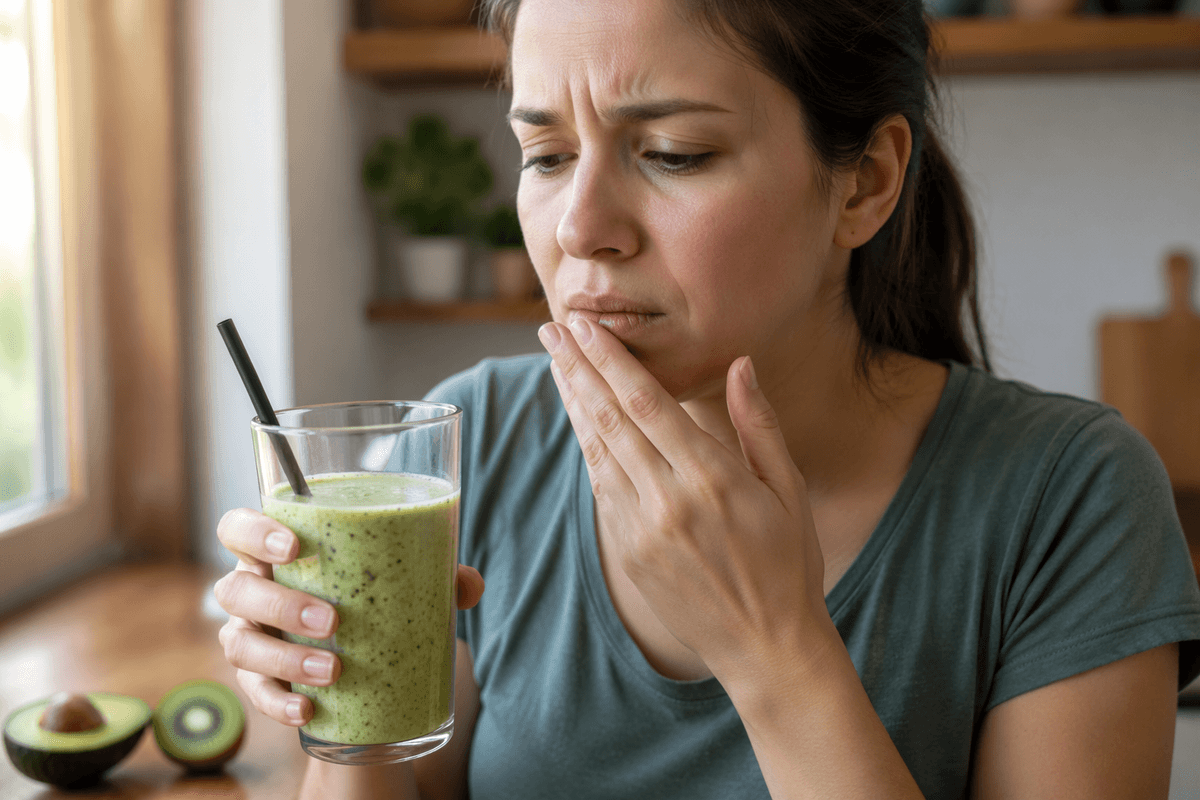
The first time you swap bananas out, it can feel like relief—until the replacement starts to “spark” in the same way. A smoothie that used to be banana-based becomes avocado or kiwi instead, and suddenly there’s that familiar tongue prickle, lip warmth, or a light throat tickle that makes you pause mid-sip. It’s an awkward moment because the change was meant to simplify things, not add a new variable.
One reason this happens is that the immune system doesn’t track foods by name; it reacts to protein shapes it has learned to treat as a threat. If your pattern sits in a latex–fruit or pollen–food cross-reaction lane, switching to a fruit with overlapping proteins can keep the same IgE-and-mast-cell “alarm” going in the mouth and throat, even though the ingredient list looks safer. The swap might be fine one week and irritating the next, especially when allergy symptoms are already humming in the background.
Other swaps create a different kind of discomfort that can be misread as “the same reaction.” Adding more berries, pineapple, or yogurt can change acidity, histamine load, or how fast the drink hits your gut, so the result may be flushing, cramping, or nausea that shows up later. When the timing shifts, it’s a quiet clue that the mechanism may have changed—even if the experience still feels like just another food letting you down.
Practical adjustments people use to clarify patterns
It often becomes clearest in the small details you only notice after a few uncomfortable repeats: the same smoothie recipe, but different results depending on the day, the season, or how quickly you drank it. That’s when people start paying attention to timing—whether the first sensation starts on contact in the mouth, or whether it waits until digestion is underway—because those two timelines don’t always point to the same underlying process.
One low-effort way people “test” their own pattern is by reducing variables rather than pushing through symptoms: trying a small amount instead of a full serving, keeping the fruit raw versus heated consistent, or separating banana from other common co-triggers like mixed fruit, or an empty stomach. The point isn’t to prove a diagnosis at home; it’s to see whether the reaction behaves like a contact-driven IgE/mast-cell alarm (fast, localized) or a gut-threshold problem (later, dose-dependent), which can look similar at first.
When the pattern starts involving repeated throat symptoms, widespread hives, or symptoms that feel like they’re escalating rather than fluctuating, that’s usually a sign to stop “experimenting” and get specific guidance, even if the last episode seemed mild.